The following is the latest health policy news from the federal government for May 1-7. Some of the language used below is taken directly from government documents.
 Congress
- Congress hopes to pass a reconciliation package to fund Immigration and Customs Enforcement (ICE) and Customs and Border Protection before June 1; lawmakers would then turn to a potential third reconciliation measure to address health care affordability before the mid-term elections. Health care provisions in a potential third reconciliation bill could include expanded access to health savings accounts (HSAs); changes to the rate at which the federal government matches state Medicaid spending (FMAP); changes to pharmacy benefit manager (PBM) spread pricing; expanded site-neutral payment policies; and others.
- The Senate Health, Education, Labor and Pension (HELP) Committee held two field hearings: the first, titled “Making Health Care Affordable Again Part 2: Perspectives from Employers, Patients, and Providers,” and the second “From Crisis to Care: Mental Health and Substance Use Treatment Across the Continuum of Care.” For more information about these hearings, see Chairman Bill Cassidy’s (R-LA) press release here; view the affordability hearing here; and view the hearing on mental health and substance abuse treatment here.
- Both chambers of Congress will return to Washington next week.
The White House
- The White House’s Office of National Drug Control Policy has released its 2026 National Drug Control Strategy. The strategy is prepared biennially and presents a strategic roadmap for the administration to work to dismantle the drug supply and overcome the spread and effect of illicit drugs in the U.S. Learn more about the strategy from this Office of National Drug Control Policy fact sheet and the strategy document itself.
- The White House Council of Economic Advisers has published a report describing the savings it expects to be derived from the administration’s most-favored-nation drug pricing policy. Learn more about the policy, the projected savings, and the methodology for calculating those savings from this report.
Centers for Medicare & Medicaid Services (CMS)
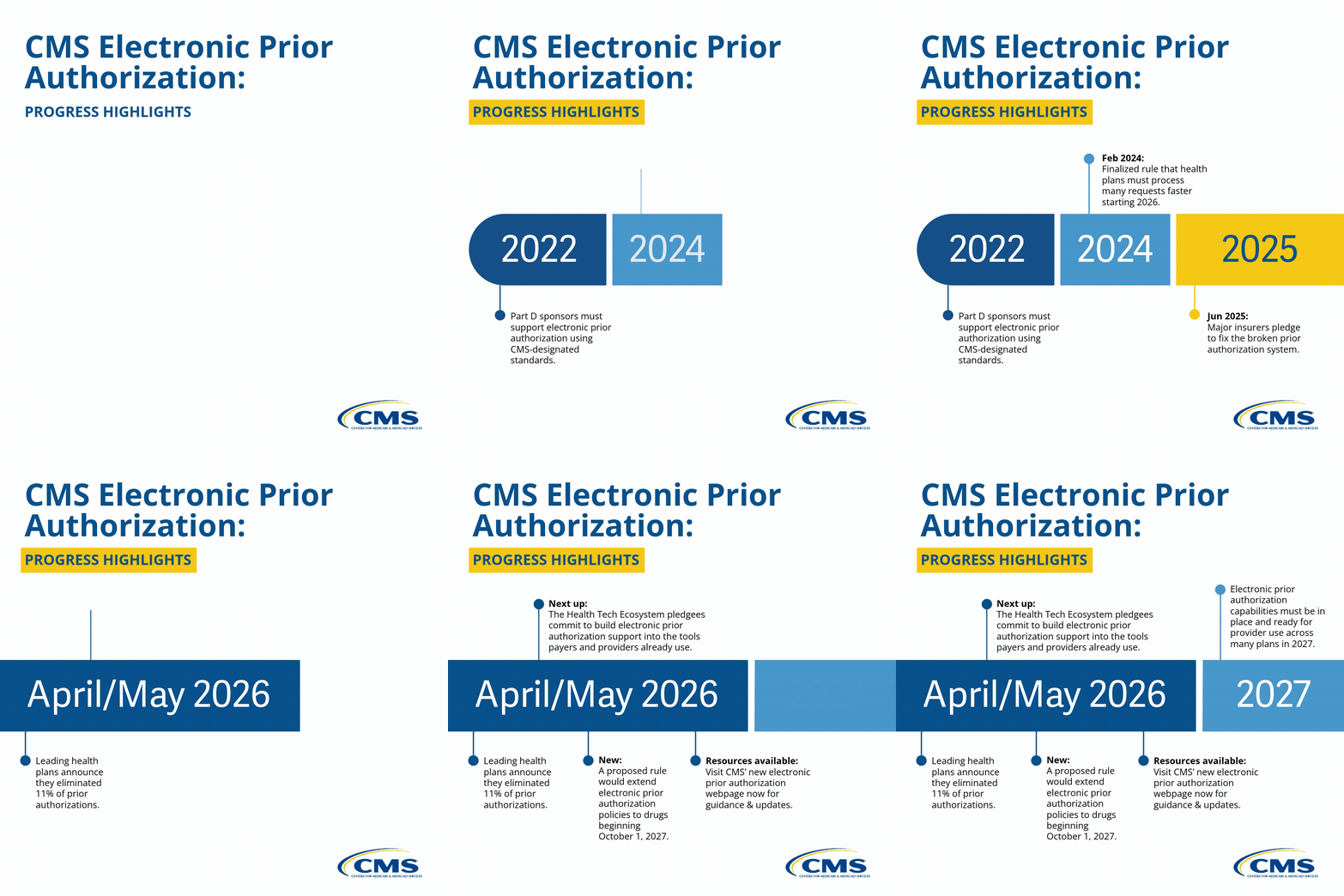
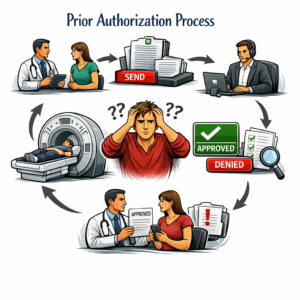 CMS has initiated a number of efforts to address challenges involving prior authorization for medical services. In a new blog post, CMS Administrator Mehmet Oz reviews past, current, and future agency efforts to address the challenges posed by the need to obtain prior authorization for medical services. The latest such step, he notes, is adding electronic prior authorization to the Health Tech Ecosystem. Under this approach, work groups across the spectrum of stakeholders will work to align CMS Interoperability and Prior Authorization Final Rule deadlines and address workflow gaps and technical handoffs that no single sector can fix alone. CMS also has been working with EHR vendors to streamline and digitize the prior authorization process. Electronic prior authorization interfaces from Medicare Advantage, Medicaid, CHIP, and marketplace plans will go live on January 1, 2027. Learn more, and find links to additional resources, from this CMS blog post. CMS also has updated its electronic prior authorization web page with additional information and posted a timeline depicting past and future actions addressing the implementation of electronic prior authorization.
- HHS has introduced a campaign to curb psychiatric overprescribing. According to HHS, its various agencies will bring together their collective expertise to evaluate prescription patterns for psychiatric medications and their benefits and potential harms and seek to elevate the role of non-medication treatments and scalable, evidence-based solutions to improve mental health. Through these efforts, plus education and outreach, program and policy actions, and research-to-practice efforts, HHS hopes to prevent the unnecessary initiation of psychiatric medications and to support tapering and discontinuation of such prescribing for patients not experiencing clinical benefits. HHS also has issued a “dear colleague” letter to industry recipients, prepared by its Substance Abuse and Mental Health Services Administration (SAMHSA), that provides more detailed information and guidance for physicians and other practitioners on the importance of deprescribing and related medical care. This guidance also explains how physicians and other practitioners can be paid for this type of care under Medicare and directs clinicians to resources for deprescribing. Learn more about this HHS initiative and planned future activities from this HHS news release; the HHS “dear colleague” letter; and this SAMHSA message to providers about medication-assisted treatment.
- CMS has asked OMB for permission to introduce a new data collection requirement, titled “Generic Clearance for the Collection of Medicare Current Beneficiary Survey (MCBS) Respondent ‘Pulse’ Feedback.” According to CMS, it will use the MCBS to establish a new tool, the “MCBS Pulse,” that it will use to establish a data-driven process in pursuit of three goals: 1) to enhance operational efficiency by enabling decision-makers to obtain time-sensitive data not available from other sources to inform program planning and development; 2) to add early design phase questionnaire testing capabilities; and 3) to rapidly gather directional feedback from beneficiaries on emerging concerns. According to CMS, each MCBS Pulse survey will be “brief and constrained in content,” containing no more than five questions. Learn more about CMS’s intentions, its plans for Pulse surveys, and the anticipated burden for participants from this CMS notice. The deadline for stakeholders to submit comments is June 1.
- CMS has sent a letter to state Medicaid directors informing them of FY 2027 updates to the Social Security Act section 1945 and 1945A Core Sets of Health Home Quality Measures for Medicaid, also known as the Health Home Core Sets. The letter presents requirements that apply to all states for the Health Home Core Sets for 2027; updates to the FY 2027 Health Home Core Sets measures subject to stratification data standards; and the effective date of the FY 2027 Health Home Core Sets. While the information to be collected constitutes direction for state Medicaid programs, providers can expect to see any changes CMS requires of the states to be reflected in the data that their state Medicaid programs seek from them. Learn more from CMS’s letter to state Medicaid directors.
- CMS has announced that it will give eligible Medicare beneficiaries access to certain GLP-1 medications for $50 a month beginning on July 1, 2026 through December 31, 2027. Under the previously announced Medicare GLP-1 Bridge program, a time-limited demonstration, CMS is expanding access to innovative, evidence-based weight-loss treatments. Eligible individuals enrolled in Medicare Part D prescription drug plans will be able to purchase these medications for $50 for a monthly supply. Learn more about the program from this CMS news release, which includes links to additional resources about the program.
- CMS has published a January 2026 update on Medicaid and CHIP eligibility and enrollment. Highlights include an eight percent decline in applications and a 3.4 million decline in enrollment from January 2025 to January 2026. States also are taking longer to review applications. Learn more from the CMS report “January 2026: Medicaid and CHIP Eligibility Operations and Enrollment Snapshot.”
- CMS has fined 13 Medicare Part C and Part D plans for failing to comply with the terms of their contracts with their members. Learn more about which plans have been fined and the nature of their violations from the CMS’s “Part C and Part D Enforcement Actions” web page (scroll down to the table).
 Department of Health and Human Services
- HHS’s Health Resources and Services Administration (HRSA) has published a notice announcing that as of August 15 it will introduce updated criteria for determining maternity care target areas. The new criteria, previously proposed and presented for stakeholder comment, removes the criterion for Social Vulnerability Index and reallocates its two points: one point to population-to-full-time equivalent maternity care health professional ratio and one point to score for travel time/distance to the nearest source of accessible care outside of the maternity care target area. Learn more about the changes, stakeholder response to HRSA’s proposal in February, and HRSA’s plans moving forward from this HRSA announcement.
- HHS’s Advanced Research Projects Agency for Health (ARPA-H) has announced the launch of its Intelligent Generator of Research (IGoR) program, a systemic effort to deliver high-quality biomedical science faster. The program will seek to accelerate breakthroughs with a next-generation, AI-powered research ecosystem built to expand the experimental capabilities available to researchers. Teams working across computational biology, AI and machine learning, experimental science, and lab infrastructure will be selected for funding to support the development of several connected components. Learn more from this HHS news release and the new IgoR web page, which includes a link to a research funding opportunity.
- HHS’s Office of the Inspector General (OIG) has issued a favorable opinion about a proposal to enter into certain lease arrangements to create a centralized location for providing a range of items and services to patients with hearing loss who may be candidates for cochlear implants. Find that opinion here.
- The OIG has issued a favorable opinion in response to a pediatric dental and orthodontic services provider’s proposal to provide free, comprehensive orthodontic treatment to one of its existing patients per year. Find that opinion here.
- CMS has added the following item to its Quality Payment Program resource library. (Note: clicking these links may give a prompt to download a file that may be a zip file.)
-
- 2026 MIPS Extreme and Uncontrollable Circumstances Exception Application Guide
- 2026 MIPS Promoting Interoperability Hardship Exception Application Guide
- 2026 CAHPS for MIPS Survey Conditionally Approved Vendors
- Performance Year 2026 Medicare CQM Reporting by Medicare Shared Savings Program Accountable Care Organizations Resource
- 2025 MIPS Quality Benchmarks Version History
 Medicaid State Plan Amendments
CMS has approved the following state plan amendments for Medicaid and CHIP programs.
- To Colorado, removing the 16 percent increase to the partial prospective rate for Principal Accountable Providers that receive 25 percent or more of their reimbursement through Alternative Payment Methodology 2.
- To Connecticut, increasing the medically needy income level.
- To Hawaii, updating the clinic services benefit to comply with revised regulations at 42 CFR 440.90.
- To Maryland, implementing a one-time three percent rate increase provided through the Maryland budget bill for the nursing facilities program.
- To North Dakota, amending the state plan to implement a two percent inflation increase for psychiatric residential treatment facility services.
- To North Dakota, amending the alternative benefit state plan to add licensed master social workers as other licensed practitioners in Medicaid expansion for 19-20-year-olds.
- To North Dakota, amending the alternative benefit state plan to add licensed master social workers as other licensed practitioners in Medicaid expansion for 21-64-year-olds.
- To Ohio, updating the Comprehensive Primary Care and Comprehensive Primary Care for Kids programs for program year 2026 by removing the team-based care activity and replacing it with continuous quality improvement; adding program entity staff and provider experience to the patient experience activity; updating the risk outlier determination methodology; clarifying that recipients attributed to other population health alternative payment models administered by Ohio Medicaid are only excluded from per member per month payment; adding that entities must engage in outreach to attributed Medicaid individuals who are not current patients; and actively using EHR in clinical services.
- To Oklahoma, amending the state’s alternative benefit plan pages to align with Oklahoma’s traditional state plan and TN 26-0002 by removing visit limits for adults for physician services, office visits, and nursing facility visits.
- To Utah, modifying providers’ qualifications for peer support specialist services.
 HHS Newsletters, Reports, and Videos
- CMS – MLN Connects – May 6 and May 7
- CMS – CMS has posted an evaluation report for implementation years 1 and 2 of its Integrated Care for Kids Model. Find the report here and a summary of the report here.
- CMS – Health Tech Ecosystem: LIVE! First Wave Launch – last month, CMS held a “Health Tech Ecosystem: LIVE! First Wave Launch” event that sought to bring together CMS infrastructure, a new Medicare app library, and an initial set of patient-facing applications to move the nation beyond clipboards, fax machines, and repetitive paperwork and into a seamless, digital‑first era. Now, CMS has posted a video of that event. Find that video here.
- Health Resources and Services Administration (HRSA) – HRSA has posted a video of a May 5 webinar during which it offered technical assistance to potential applicants to the FY 2026 Transforming Pediatrics in Early Childhood Notice of Funding Opportunity. Find that video here.
- CDC – Morbidity and Mortality Weekly Report (MMWR) – April 30
 U.S. Citizenship and Immigration Services (USCIS)
The USCIS has exempted physicians from the freeze on the visa review process that was part of a January 2026 travel ban that originally froze applications for citizens of 39 countries, including those already working in the U.S. In an undated update of its “Update on USCIS’ Strengthened Screening and Vetting” web page, the agency lists physicians among a number of groups for which holds on visa reviews have been lifted. This and other exemptions were not specifically announced; they were added to an existing statement of the policy. Find that statement, which mentions the exemption of physicians from this review process, on the USCIS “Update on USCIS’ Strengthened Screening and Vetting” web page.
Medicare Payment Advisory Commission (MedPAC)
MedPAC has submitted comment letters in response to CMS’s FY 2027 proposed rules on hospice; skilled nursing facilities; inpatient rehabilitation facilities; and inpatient psychiatric facilities. In each letter, MedPAC recommended that Congress repeal the existing Medicare wage index statutes, including current exceptions, and require the Secretary to phase in a new Medicare wage index system for hospitals and other types of providers that:
- uses all-employer, occupation-level wage data with different occupation weights for the wage index of each provider type;
- reflects local area level differences in wages between and within metropolitan statistical areas and statewide rural areas; and
- smooths wage index differences across adjacent local areas.
Learn more from these MedPAC letters to CMS:
- MedPAC comment on CMS’s proposed rule on hospice for FY 2027
- MedPAC comment on CMS’s proposed rule on skilled nursing facilities for FY 2027
- MedPAC comment on CMS’s proposed rule on inpatient rehabilitation facilities for FY 2027
- MedPAC comment on CMS’s proposed rule on inpatient psychiatric facilities for FY 2027
Centers for Disease Control and Prevention (CDC)
The CDC reports 1,814 confirmed measles cases in 37 states as of April 30. There have been 24 new outbreaks this year and 93 percent of the total number of cases are outbreak-associated; there have been no measles-related deaths this year. Learn more from the CDC’s Measles Cases and Outbreaks website.
 Food and Drug Administration (FDA)
- The FDA approved an expanded use for Auvelity, an extended-release tablet to treat agitation associated with dementia in adults with Alzheimer’s disease. This is the first FDA-approved non-antipsychotic treatment for this condition. Learn more from this FDA news release.
- The FDA has introduced Elsa 4.0, an upgraded internal AI tool, and consolidated more than 40 application and submission data sources, systems, and portals into a new platform it calls Harmonized AI & Lifecycle Operations for Data (HALO). These tools seek to enable improved data querying, workflow development, and broader deployment of AI across agency operations. Learn more from this FDA news release.
Government Accountability Office (GAO)
With 242 federal programs providing a range of benefits and services to pregnant women, children through age five, or their families and 15 of those programs providing provide some amount of direct services solely to this population, a recent GAO audit found that three of those direct services programs – HHS’s Preschool Development Grants Birth Through Five Program, the Department of Agriculture’s Special Supplemental Nutrition Program for Women, Infants, and Children Farmers Market Nutrition Program, and the VA’s Veterans Health Administration Maternity Care Coordinator Program – lack performance management processes. Learn more about what OMB found and its recommendations for addressing the shortcomings it identified in the GAO report “Pregnancy and Early Childhood: Performance Management Process Needed for Three Programs.”
 Stakeholder Events
HHS/Administration for Strategic Preparedness and Response – Medical Leadership in Disaster Preparedness and Response Webinar – May 11
HHS’s Administration for Strategic Preparedness and Response (ASPR) will hold a webinar on medical leadership in disaster preparedness and response on Monday, May 11 from noon to 4:30 (eastern). The conference will bring together individuals who have a medical direction role during disasters to discuss the spectrum of medical leadership responsibilities and some of the specific challenges of the role. Among the subjects they will address are developing/implementing best practices during a disaster; navigating downtime; using data for action; learning about the new disaster medicine subspecialty; and discovering health care surge tools. Learn more about the webinar, including continuing medical education credits and how to register to participate, from this ASPR notice.
CMS Center for Clinical Standards and Quality – Quarterly Stakeholder Webinar – May 12
CMS’s Center for Clinical Standards and Quality will hold a quarterly stakeholder webinar on Tuesday, May 12 at noon (eastern). Agency staff will present an update on its work to strengthen health care quality, safety, and coverage and describe recent policy developments. Go here to register to participate.
OPTN – National Town Hall Meeting –May 13
The Organ Procurement and Transplantation Network (OPTN) will hold a town hall meeting for members of the community and the public on Wednesday, May 13 at 3:00 (eastern). During the event, officials will provide updates on the current state of the OPTN and its modernization efforts. Participants will have the opportunity to submit questions in advance and the session will include a moderated question-and-answer period. Go here to learn more and to register to participate.
CMS – HCPCS Level II Public Meetings – June 1
CMS will hold its 2026 HCPCS level II public meeting, in person and virtually, on June 1, 2026 at 9:00 (eastern), with an overflow date of Tuesday, June 2, 2026 to be held virtually, if necessary, to discuss CMS’s preliminary coding, Medicare benefit category, and Medicare payment determinations. Learn more about the meeting, including how to submit questions and comments and register to participate, from this CMS notice.
MedPAC – Commissioners Meeting – September 3-4
MedPAC’s commissioners will hold their next public meeting virtually on Thursday, September 3 and Friday, September 4. An agenda for the meeting and information about how to participate have not yet been posted; when they are, they will be found here.