
Don’t Miss:
- Energy and Commerce to weigh multiple health care bills
- HRSA shares upcoming 340B administrative changes
- CMS continues distributing Rural Health Transformation Program $$$
The following is the latest health policy news from the federal government for September 4-10. Some of the language used below is taken directly from government documents.
The White House
 The White House announced that the federal government will issue refunds of $500 a person to nearly one million Americans who it says were overcharged for Affordable Care Act exchange health plans because their premiums included user fees that were charged to cover the cost of running the exchange but exceeded the actual cost of doing so, resulting in a surplus of funds. The refunds will be paid to residents of the 30 states who purchased their health insurance through the federal exchange but only to those who did not receive premium assistance under the Affordable Care Act. The federal government will begin making these payments in October. Learn more from this White House fact sheet.
Congress
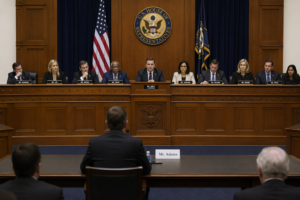
- The House Energy & Commerce Committee’s Health Subcommittee will hold a hearing titled “Examining Legislative Proposals to Reform Medicare Provider Payment and Bolster Health Care Cybersecurity” on September 15 at 10:15 (eastern). The markup will include bills seeking to modify certain physician payments under Medicare, such as the “Patients First Act of 2026” (H.R. 9693), “Provider Reimbursement Stability Act of 2026” (H.R. 8163), and “Medicare Physician Data-driven Performance Payment System Act of 2026” (H.R. 8622). Other measures to be addressed in the markup include cybersecurity in the health care system and expansion of seniors’ access to care. Go here to find the committee’s notice of the hearing, the full list of bills to be considered, and a link to a video of the committee meeting.
 The House Democratic Doctors Caucus has urged CMS Administrator Mehmet Oz to reverse an interim final rule requiring medically frail Medicaid applicants to show that their condition limits their ability to work before they can qualify for an exemption from Medicaid community engagement requirements. In a letter to Dr. Oz, the caucus argues that the policy is inconsistent with H.R. 1, the requirement’s enabling legislation. See that letter here.
- The House will recess no later than September 17; lawmakers will only return for the last two weeks of September if the Senate moves on a reconciliation bill. The Senate is still scheduled to be in Washington from September 14 through October 3 before another month-long recess through election day.
Centers for Medicare & Medicaid Services (CMS)
- CMS is barring 11 medical supply companies with more than $3.4 billion in suspected fraudulent billing practices in 2025 and 2026 from receiving future Medicare Advantage Part C and Part D payments. These 11 durable medical equipment, prosthetics, orthotics, and supplies (DMEPOS) companies had submitted no claims prior to 2025; used improper billing practices for their claims; billed for medical equipment to beneficiaries already deceased; and supplied equipment to beneficiaries who never requested or received it. Four of the suppliers had already been banned from original Medicare and began billing Medicare Advantage plans instead. According to the agency, its use of advanced data analytics contributed to its identification of these companies. Learn more about the types of fraud CMS identified and find specific examples of fraudulent billing practices in this CMS news release.
 CMS has updated COVID-19 vaccine payment allowances. Learn more about updated billing codes, short descriptors, payment allowances, and effective dates from CMS’s Vaccine Pricing web page.
- CMS has posted a bulletin addressing Medicare secondary payer claim processing for certain claim adjustment reason codes. Learn more about upcoming changes that will take effect on January 1, 2027 from this CMS bulletin.
- CMS has updated its “Guidelines for Teaching Physicians, Interns & Residents” booklet. Find the updated booklet here.
- Starting October 1, rural health clinics (RHCs) and federally qualified health centers (FQHCs) must bill for distant site telehealth services using individual CPT or HCPCS codes that describe the service furnished and the appropriate telehealth modifier instead of the single HCPCS code G2025. Learn more, including about current rates, from this CMS notice and the CMS bulletin “RHCs & FQHCs: Billing Distant Site Telehealth Services.”
- CMS has renamed health plans currently known as “Individual Coverage Health Reimbursement Arrangements,” or “ICHRAs.” The agency now refers to such plans as “CHOICE Arrangements,” which it describes as “… a type of health reimbursement arrangement (HRA) that allows employers to give employees tax-free money to buy their own individual health insurance, instead of offering a traditional group health plan.” Learn more about CHOICE Arrangements from CMS’s “Employer Initiatives” web page.
- CMS has added the following item to its Quality Payment Program resource library. (Note: clicking this will download a zip file.)
 CMS has updated COVID-19 vaccine payment allowances. Learn more about updated billing codes, short descriptors, payment allowances, and effective dates from CMS’s
 HHS/Health Resources and Services Administration (HRSA)
 HRSA has released new information about the Office of Management and Budget’s approved 340B Office of Pharmacy Affairs Information System Paperwork Reduction Act forms. To help stakeholders prepare for these updates, HRSA has developed a program update and presentation outlining the changes, implementation information, and requirements that remain unchanged. In the program update, HRSA notes that “These updates do not change the underlying statutory eligibility requirements for participation in the 340B Program.” Learn more from the presentation and the program update.
- HRSA has awarded nearly $25 million to 132 hospitals through the Rural Hospital Provider Assistance Program to help eligible small rural hospitals maintain their medical workforce, sustain essential health care services, and strengthen access to care for the communities they serve in 13 states. Grant recipients may use this funding to retain physicians, nurses, and other health care providers to help preserve essential services, including emergency, inpatient, and other critical services. Learn more about the grants and find a list of grant recipients in this HHS news release.
- HRSA has awarded $11.2 million to support the development of 15 new physician residency programs in rural communities in 14 states. The Rural Residency Planning and Development Program awards will create new residency programs in family medicine, internal medicine, preventive medicine, psychiatry, and general surgery. Learn more about the program and the funding awarded from this HHS news release.
- HRSA has posted a notice announcing its intention to seek changes in its current Bureau of Workforce Performance data collection. The primary objectives of HRSA’s proposed changes are to reduce administrative reporting burden, align with evolving program management needs, facilitate granular post-training tracking of graduates, and foster direct accountability to evidence-based legislation. The request also seeks to include an additional dropdown option for three questions that would be applicable only to Children’s Hospital Graduate Medical Education (CHGME) applicants and grantees: those questions address “Sex Rejecting Procedures and Services for Minors,” “Individuals Receiving Training on Sex Rejecting Procedures and Services for Minors,” and “This Site Offers Sex Rejecting Procedures and Services for Minors.” Learn more about these and other proposed changes from this HRSA announcement. The deadline for submitting comments about proposed changes in this data collection is November 9.
- HRSA is seeking permission from the Office of Management and Budget to introduce a new data collection program titled “Rural Communities Opioid Response Program Performance Measures” that is designed to respond to the growth in the number of grant initiatives included within the Rural Communities Opioid Response Program (RCORP) and emerging substance use disorder and other behavioral health trends in rural communities. The proposed data collection includes performance measures for the new RCORP-Northern Border Rural Workforce, Pathways, and Overdose Response grant programs. Learn more about the programs that would be required to report under this data collection program, the data affected entities would be required to submit, and the anticipated administrative burden for reporting this data from this HRSA announcement. The deadline for stakeholders to submit comments about the proposed data collection is October 5.
Department of Health and Human Services (HHS)
- HHS and its Substance Abuse and Mental Health Services Administration (SAMHSA) have awarded $383.4 million in grants to strengthen behavioral health treatment, prevention, and crisis response nationwide. Of that funding, $252 million will support the 988 Suicide & Crisis Lifeline, suicide prevention, and mobile crisis services. Learn more about the funding and the specific programs through which it was awarded and find links to lists of grant recipients in this HHS news release.
- HHS’s Office of the Inspector General has issued a favorable opinion regarding a referral service that would connect patients requiring specialized ear and hearing services with hearing professionals. Find that advisory opinion here.
Rural Health Transformation Program Funding
 In the past week CMS has announced that it has awarded Rural Health Transformation Program money to the following states:
- To New York, $76 million to strengthen regional coordination and modernize health care technology
- To Rhode Island, $5.48 million to strengthen the health care workforce pipeline in rural areas
- To Michigan, $25 million to modernize health care technology, expand telehealth, and improve high-speed internet connectivity across the state
- To Vermont, $11.7 million to expand access, improve patient care facilities, and strengthen workforce capacity in nursing homes and long-term-care systems
- To West Virginia, $4.8 million to strengthen the state’s rural health care workforce and expand preventive care
Medicaid State Plan Amendments
 CMS has approved state plan amendments for Medicaid and CHIP programs for the following states:
- Arkansas, updating the effective date of selected rates
- Connecticut, updating the effective date and fee schedule for freestanding birthing centers
- District of Columbia, updating home health services
- Georgia, revising the calculation and allocation methodology for Medicaid DSH payments
- Georgia, increasing reimbursement rates for selected tests performed in the program’s
- newborn screening process
- Kansas, authorizing payments to EMS providers for calls for services that do not result in transportation to a hospital
- Massachusetts, updating freestanding ambulatory surgical centers
- Minnesota, increasing the Medicare Resource Based Relative Value Scale calculated conversion factor values for 2026 for physician services
- New Hampshire, updating the methodology and pool of funds for the distribution of nursing facility supplemental payments
- New Hampshire, extending enhanced maternity care reimbursement rates to critical access hospitals
- New Hampshire, updating FY 2026 Medicaid DSH payments to qualifying non-public hospitals
- Pennsylvania, establishing a new class of hospitals to receive supplemental Medicaid payments
- South Dakota, updating provider lists and increasing supplemental payments for selected inpatient and nursing facility providers
- Washington, authorizing the state to use contractors to audit cost reports
State-Directed Medicaid Payments
CMS has approved preprints for Medicaid state-directed payments for the following states:
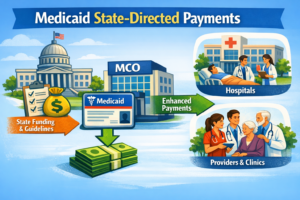 California, renewing a rate increase for inpatient and outpatient services provided by eligible children’s hospitals
- California, amending a rate increase for dental services
- Colorado, amending the minimum fee schedule for behavioral health outpatient services
- District of Columbia, renewing a rate increase for inpatient and outpatient hospital services
- Indiana, renewing a rate increase for nursing facility services
- Iowa, renewing a rate increase for physician and professional services provided at qualifying state-owned or operated professional services practices
- Louisiana, renewing a rate increase for professional services at an academic medical center, primary services, and specialty care services
- Missouri, renewing the minimum fee schedule for community mental health clinics
- New Jersey, renewing a rate increase for primary care services to meet HealthySteps model fidelity
- New Jersey, renewing a rate increase for EPSDT services
- New Jersey, renewing a rate increase for publicly owned large nursing homes
- Pennsylvania, amending Quality Payment/Pay for Performance and Performance Improvement Initiative payments for nursing facility services
- Tennessee, amending the minimum and maximum fee schedules for inpatient and outpatient hospital services
- Tennessee, amending a rate increase for inpatient and outpatient hospital services
- Virginia, amending a rate increase for services performed by physicians employed by or contracted with non-state government-owned general acute-care hospitals
- Virginia, renewing a rate increase for inpatient and outpatient hospital services rendered by all non-state government-owned hospitals
- Virginia, renewing a rate increase for physicians employed by or contracted with non-state government-owned general acute-care hospitals
- Virginia, renewing a rate increase for professional services at an academic medical center
- Virginia, renewing a rate increase for specialty physician services
- Texas, renewing a behavioral health services directed payment program for community mental health centers and local behavioral health authorities
- Washington, renewing a rate increase for qualified licensed professionals employed by a state university-owned or operated hospital or affiliated practice, state-owned and operated school of dentistry, or public hospital district
- Washington, renewing a rate increase for inpatient and outpatient hospital services with designated public hospitals operated by a public hospital district, excluding critical access hospitals
- Washington, renewing a rate increase for inpatient and outpatient hospital services provided by eligible critical access hospitals and prospective payment system hospitals
- West Virginia, renewing a rate increase for acute-care hospitals for inpatient, outpatient, and physician services
Health Policy Newsletters, Reports, and Videos
 CMS – MLN Connects – September 10
- CMS – instructional video on calendar year 2024 doctors and clinicians quality payment program performance information on the Medicare.gov Compare tool – posted on September 10
- CMS – “Getting Started With the Ambulatory Specialty Model” – instructional onboarding video presentation posted on September 9
- CMS/Center for Medicare and Medicaid Innovation – “Value in Opioid Use Disorder Treatment Demonstration Program – Final Report to Congress (RTC)” – September 2026 (and “Findings at a Glance”)
- HHS/Health Resources and Services Administration (HRSA) – instructional video presenting HRSA’s Application Validation Assistant (AVA), a standalone optional tool to help streamline and improve the process of submitting applications to HRSA
- HHS/Office of the Inspector General (OIG)
- “This Week at OIG” video – September 4
- “CMS Could Improve Oversight of States’ Use of Contract Surveyors for Nursing Home Surveys” – September 2 report
- HHS/Office of the Assistant Secretary for Planning and Evaluation (ASPE) – “Aligning Initiatives to End the HIV Epidemic in the United States” – September 8 report
- Government Accountability Office (GAO) – “Federal Rulemaking: Agencies Continue to Use Good Cause and Other Mechanisms to Forgo Public Comments” – September 4 report
- Congressional Budget Office – “The Effects of Changing Temperatures on the Medicare Population” – September 8 report
- Congressional Research Service – “Avian Influenza (Bird Flu) in the United States” – September 8 report
Food and Drug Administration (FDA)
The FDA announced the selection of four senior leaders, including Jared Seehafer, M.S., who will act as the agency’s first Deputy Commissioner for Technology and Artificial Intelligence. He previously served as a senior advisor to the FDA and helped develop a white paper on generative AI-driven device regulation. For more information, see the press release here.
 Federal Trade Commission (FTC)
The FTC has rescinded its 2021 policy statement “On Breaches by Health Apps and Other Connected Devices,” which it issued at the time “In recognition of the proliferation of apps and connected devices that capture sensitive health data.” In rescinding the policy, the FTC notes that “Protecting the privacy of Americans’ sensitive health information remains a top priority of the Commission. However, the Commission has determined that the statement – contentious at the time of issuance – provided minimal benefit and has been superseded by rulemaking.” Learn more from this FTC news release and the formal Rescission of Policy Statement.
Justice Department
The Justice Department has announced an agreement with a New York health system that resolves an investigation into potential violations of federal law arising from its provision of gender-affirming care. Under the agreement, the health system will cease providing such services to minors, pay a monetary penalty, and spend $2 million to provide free medical care to individuals “… suffering harmful consequences of ‘gender affirming care’ they received as children.” Learn more from this Justice Department news release.
Medicare Payment Advisory Commission (MedPAC)
 Members of the Medicare Payment Advisory Commission held their latest public meeting on Thursday, September 3 and Friday, September 4. The subjects on the meeting’s agenda were:
- context for Medicare payment policy
- issues and potential policy directions in Part D
- workplan: ambulatory surgical centers
- examining use of post-acute-care services by beneficiaries in fee-for-service Medicare and Medicare Advantage
- accuracy of Medicare Advantage risk adjustment at the plan level
Go here for summaries of the issues and key points and links to the presentations delivered by MedPAC’s staff and go here for a transcript of the two-day session.
Stakeholder Events
HHS/Office of the Assistant Secretary for Planning and Evaluation – Physician-Focused Payment Model Technical Advisory Committee Meeting – September 14-15
 HHS’s Physician-Focused Payment Model Technical Advisory Committee (PTAC) will hold a public meeting on Monday, September 14 and Tuesday, September 15 to seek stakeholder input on its draft white paper “Transforming Health Care Delivery Through Value-Based Payment Models and Care: A Roadmap.” The paper presents a roadmap for advancing the development and implementation of Alternative Payment Models (APMs) that supports the transformation of the health care system toward high-value, patient-centered care. Go here to learn more about the meeting, its agenda and schedule, the people who will be making presentations, and how to participate by making a public comment.
CMS – Medicare Diabetes Prevention Program – September 15
CMS’s Medicare Diabetes Prevention Program staff will hold a webinar to discuss the removal of the program’s Once-Per-Lifetime Limit on Tuesday, September 15 at 1:00 (eastern). This webinar will cover the background on this policy change and highlight rules and considerations for program service delivery. Go here to learn more about the webinar and to register to participate.
CMS – PEPPER Training for Home Health Agencies and Partial Hospitalization Programs – September 24
On Thursday, September 24 at 1:00 (eastern), CMS will hold a webinar to provide training for home health agencies and partial hospitalization program facilities on how to access, interpret, and use their latest PEPPER (Program for Evaluating Payment Patterns Electronic Report) report to support data-driven decision-making. Go here to register to participate.
MACPAC – Commissioners Meeting – September 24-25
MACPAC’s commissioners will hold their next public meeting on Thursday, September 24 and Friday, September 25. An agenda for the meeting has not yet been posted; go here to register to participate.
CMS – PEPPER Training for Skilled Nursing Facilities – September 29
On Tuesday, September 29 at 1:00 (eastern), CMS will hold a webinar to provide training for skilled nursing facilities on how to access, interpret, and use their latest PEPPER (Program for Evaluating Payment Patterns Electronic Report) report to support data-driven decision-making. Go here to register to participate.
MedPAC – Commissioners Meeting – October 8-9
MedPAC’s commissioners will hold their next public meeting virtually on Thursday, October 8 and Friday, October 9. An agenda for the meeting and information about how to participate have not yet been posted; when they are, they will be found here.
CMS – 2026 CMS National Provider Enrollment Conference – November 18-19
CMS will hold a national provider enrollment conference on Wednesday, November 18 and Thursday, November 19 in Kissimmee, Florida. The event will provide direct access to the staff responsible for shaping and administering Medicare provider enrollment. Through keynote presentations, panel discussions, interactive Q&A sessions, and expert-led training, participants will gain insight into enrollment policy, program integrity initiatives, compliance requirements, operationally friendly best practices, and upcoming changes affecting the Medicare provider enrollment landscape. Learn more from this CMS conference notice.